AGIbot: Europe's First Chinese-Built Humanoid Robot Factory Opens in Serbia
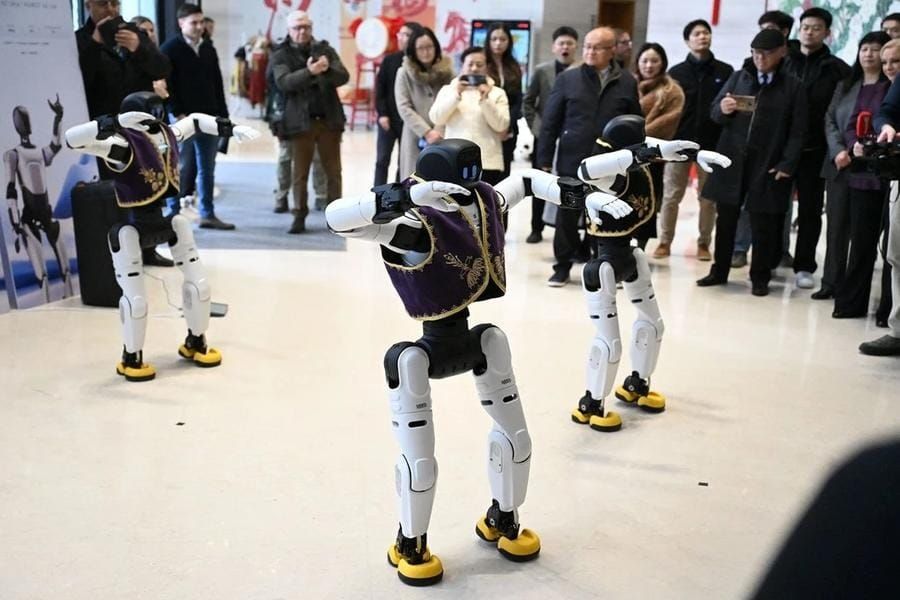
AgiBot and Minth Group launch production in Šabac, marking a new era for European automation
A Historic Milestone in Robotics Manufacturing
In a development that signals a fundamental shift in global industrial automation, Chinese robotics company AgiBot has partnered with automotive parts manufacturer Minth Group to establish Europe's first Chinese-owned humanoid robot factory. The facility, located in Šabac, Serbia, began production in June 2026, creating what industry observers describe as a watershed moment for European manufacturing.
The partnership brings together AgiBot's advanced robotics platforms with Minth Group's established European manufacturing infrastructure, supply chain networks, and regional market expertise. This collaboration represents a strategic departure from traditional export models, positioning production capabilities directly within the target market.
Investment and Production Capacity
The factory's initial phase encompasses approximately 3,000 square metres of production space, supported by a €20 million investment. At full operational capacity, the plant is expected to assemble more than 5,000 robots annually while generating approximately 200 new jobs in the region.
Serbian government officials have indicated that the broader project vision extends considerably further, with potential total investment reaching €200 million. Should the expansion proceed as planned, annual production capacity could scale to 20,000 units, encompassing both humanoid robots and quadruped robot dogs.
Strategic Applications and Market Focus
The first production units from the Šabac facility are slated to support Expo 2027 in Belgrade, demonstrating Serbia's commitment to positioning itself at the forefront of advanced manufacturing. Beyond this showcase application, the plant's output will target three primary European market segments:
- Industrial applications: Factory automation and manufacturing support
- Logistics operations: Warehouse management and material handling
- Service sectors: Public-facing and commercial service roles
Navigating European and American Regulations: The Serbia Advantage
One of the most strategically significant aspects of this project is Serbia's unique position as a non-EU country that maintains deep regulatory and trade integration with the European bloc. This creates a nuanced compliance landscape that benefits European market access while offering limited advantages for the United States.
Accessing the European Union Market
Despite not being an EU member, Serbia has harmonized its industrial standards with EU directives. This allows robots manufactured in Šabac to obtain CE certification locally, granting them full legal access to the EU single market without requiring additional recertification at the border. This significantly reduces the time and cost associated with regulatory compliance.
On the trade front, Serbia's Stabilisation and Association Agreement (SAA) with the EU eliminates or substantially reduces customs duties for most industrial goods. Robots assembled in Serbia can therefore enter the EU at considerably lower tariff rates than units shipped directly from China, effectively bypassing anti-dumping duties and countervailing tariffs that the EU has recently imposed on certain Chinese technology products.
However, these tariff preferences depend on rules of origin—sufficient value must be added in Serbia to qualify. The factory's integration of locally sourced components through Minth Group's established European supply chains makes this requirement achievable. A long-term consideration remains: Serbia is an EU candidate country. Should it eventually join the bloc, the factory would then fall under stricter EU state-aid rules, foreign-subsidy regulations, and investment screening mechanisms, potentially reducing some of its current regulatory flexibility.
Accessing the United States Market
For the U.S. market, the Serbia strategy offers limited to no advantage. Recent U.S. executive orders and proposed regulations targeting advanced robotics from "foreign adversaries" focus on the origin of production, not the nationality of the corporate parent. Any robot manufactured outside the United States—whether in China, Serbia, or elsewhere—remains subject to these restrictions.
While Serbia itself is not a target of U.S. sanctions, American authorities could still impose tariffs or import controls on Serbian-made robots if they are deemed to contain significant Chinese-origin technology, particularly AI chips, advanced sensors, or proprietary actuators. This means the Šabac factory cannot serve as a bypass for U.S. trade barriers.
Instead, the facility provides a neutral ground for servicing non-U.S. markets—primarily Europe, the Middle East, and Africa—while keeping the Chinese supply chain intact. For meaningful access to the United States, AgiBot would likely need a separate strategy, such as licensing agreements, joint ventures with U.S. manufacturers, or establishing production on American soil.
| Market | How Serbia Helps | How Serbia Doesn't Help |
|---|---|---|
| European Union | CE certification access; reduced tariffs via trade agreement; faster delivery and local service response | If Serbia joins the EU, some regulatory advantages may diminish over time |
| United States | Minimal direct help; serves as a geopolitical hedge and alternative market base | Cannot bypass U.S. restrictions on foreign-made robots; still subject to tariffs and import controls on advanced technology |
A Strategic Shift for Chinese Robotics
The Serbia plant represents more than just a new manufacturing facility—it signals a strategic evolution for Chinese robotics companies. By establishing local production capabilities, AgiBot and its partners are moving beyond traditional export models to:
- Reduce delivery times and logistics costs for European customers
- Improve after-sales service responsiveness through regional presence
- Mitigate exposure to potential trade barriers and tariffs within the EU
- Build stronger relationships with local supply chains and business partners
Importantly, this is a Europe-first strategy, not a global workaround. It effectively solves the European problem—high tariffs, slow delivery, and regulatory friction for Chinese exports—but does not address U.S. trade restrictions, which are explicitly designed to target all foreign production regardless of location. For AgiBot and Minth, this factory is about winning the European market while maintaining strategic flexibility for other regions.
This approach mirrors strategies previously adopted by automotive and electronics manufacturers, now being applied to the rapidly growing robotics sector.
Implications for European Industry
For European businesses facing persistent labour shortages and increasing pressure to automate, the new factory offers access to cutting-edge robotics technology with reduced lead times and local support. The facility's presence in Serbia positions the Balkan nation as an emerging hub for advanced manufacturing, potentially attracting additional investment and expertise to the region.
The partnership also raises important questions about technology transfer, industrial standards, and the evolving relationship between Asian innovation and European manufacturing capacity. As the first facility of its kind, it will likely serve as a test case for future Chinese robotics investments in Europe.
Looking Ahead
As the Šabac facility ramps up production, industry observers will be watching closely for:
- Expansion timelines and additional investment phases
- Customer adoption rates across industrial and service sectors
- Regulatory developments regarding robotics in European workplaces and potential updates to trade policies
- Competitive responses from established European and Asian robotics manufacturers
- Whether this model is replicated in other non-EU European countries or extended to other regions
The successful establishment of this facility could serve as a blueprint for further Chinese robotics investment in Europe, fundamentally reshaping the competitive landscape of industrial automation on the continent. It also demonstrates a sophisticated understanding of regulatory arbitrage—leveraging Serbia's unique position to optimize market access while preparing for multiple future scenarios.