LG's Actuator Push Signals Dual Humanoid Strategy Amid Surging Market Demand
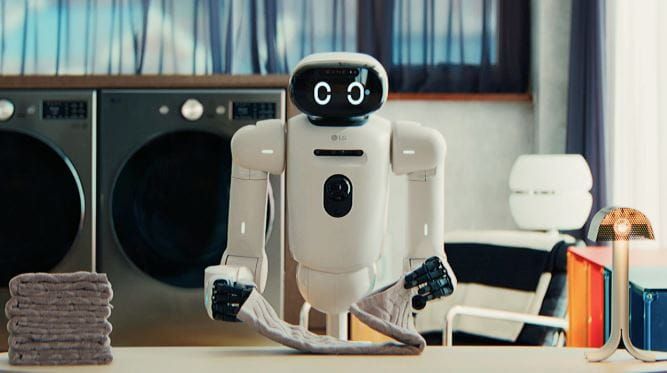
LG Electronics is positioning itself at the center of the humanoid robotics supply chain, advancing customer development for its newly launched AXIUM actuators while pursuing a dual strategy of building its own humanoid platform and becoming a key external component supplier.
The South Korean tech giant confirmed at IFA 2026 in Berlin that supply discussions are underway with multiple global technology, logistics, manufacturing, and robotics companies . A key meeting with a major tech company to review production readiness and technical specifications is scheduled for October .
Market Context: Actuators as the Industry Bottleneck
The timing of LG's push aligns with explosive market growth projections. The global humanoid robot joint actuator market was valued at approximately $6 billion in 2025 and is forecast to reach $25.6 billion by 2032, representing a compound annual growth rate of 22.9% . Industry estimates suggest actuators account for 60-70% of a humanoid robot's material costs .
According to IDTechEx analysis, a typical humanoid robot contains around 31 actuators, which collectively account for approximately 56% of the robot's total weight . This makes actuator technology one of the most critical bottlenecks in robotics commercialization, with supply constrained by precision manufacturing capacity and cost-performance trade-offs .
Technical Differentiation and Competitive Positioning
LG is leveraging six decades of motor manufacturing experience from its home appliance business to establish competitive advantages . The company claims its ultra-high-speed motor technology, capable of exceeding 100,000 RPM, enables actuators that are 30-40% smaller and lighter than competing designs .
"The key components of an actuator are the motor that generates force, the reducer that transmits it, and the driver that controls it," said Baek Seung-tae, head of LG's HS Business Division, during the IFA 2026 press briefing . "Because we have ultra-high-speed motor technology, we can produce motors that are more than 30 percent lighter and smaller than those of our competitors" .
LG currently offers nine AXIUM models across different sizes and plans to establish a fully automated mass-production line at its Changwon factory by year-end . The company expects actuator external sales to reach levels comparable to its compressor business within one to two years .
However, LG acknowledges it has yet to secure reducer technology—a critical component for torque transmission. The company is pursuing a dual strategy of internal development and external sourcing for reducers .
The Humanoid Platform Partnership: NVIDIA
In August, LG and NVIDIA announced development of a next-generation bipedal humanoid robot built on NVIDIA's Isaac GR00T foundation model, with a public unveiling targeted for Q1 2027 . The robot will feature NVIDIA's Jetson Thor computing platform and Holoscan for Robotics safety system .
LG is integrating technologies across its affiliates: actuators from LG Electronics, sensors from LG Innotek, and batteries from LG Energy Solution . Group Chairman Koo Kwang-mo and NVIDIA CEO Jensen Huang formalized the partnership with a memorandum of understanding at NVIDIA's Santa Clara headquarters .
The collaboration extends beyond the robot itself. LG is building a robotics data flywheel at its Seoul Data Factory in Yangjae, combining decades of manufacturing and logistics data with NVIDIA's robotics development platform . The facility, spanning 10,000 square meters across four floors, will house several hundred LG CLOiD robots by year-end .
LG plans to generate approximately 100,000 hours of training data by year-end—equivalent to roughly 12 years of operational data—using NVIDIA's Cosmos open-world models for data augmentation and synthesis . This data will advance LG's Robot Foundation Model for humanoid robots .
Dual Strategy: Building and Supplying
The actuator disclosure reveals a strategic two-pronged approach. LG is simultaneously developing its own humanoid robot stack—from components to foundation models—while positioning its core hardware as an external supply business for the broader robotics industry.
This mirrors trends identified by IDTechEx, which notes that "the current focus of the humanoid industry is on standardizing components, optimizing designs for manufacturability, and building supply chains," with partnerships emerging between humanoid OEMs and actuator suppliers .
LG plans to deploy humanoid robots at its Tennessee washing machine factory and Changwon Smart Factory to validate performance before expanding to home applications . The company established a dedicated Robotics Business Center reporting directly to the CEO, consolidating its robotics operations under "One LG" synergies .
The group is also building AI infrastructure to support physical AI development, including an 80-megawatt AI factory in Cheonan scheduled for 2028 . These investments signal LG's commitment to robotics as a core future business, with actuator sales expected to grow significantly starting in 2030 .