Profile: thehumanoid.ai - Artem Sokolov
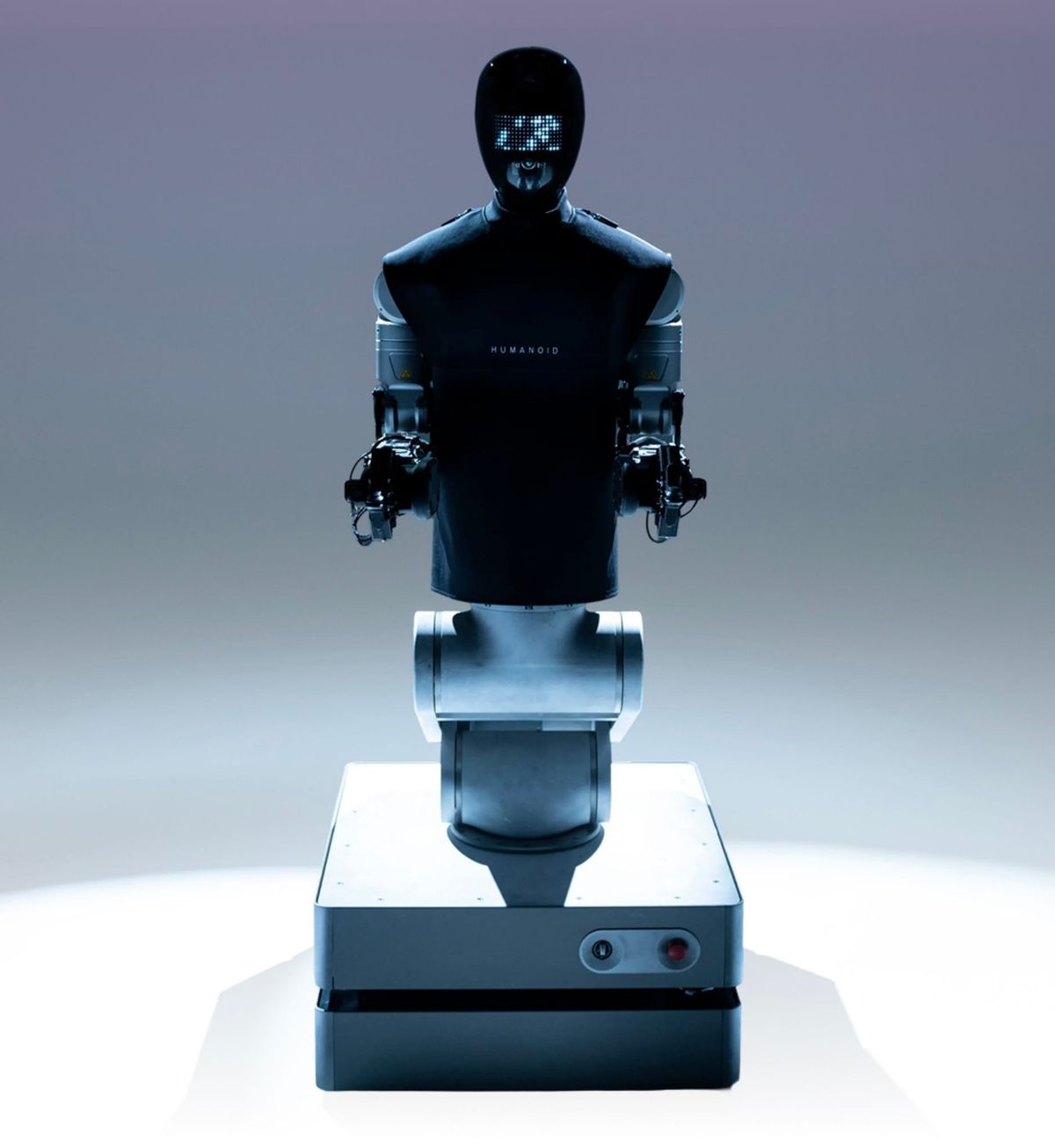
The jeweller who built Britain's robot
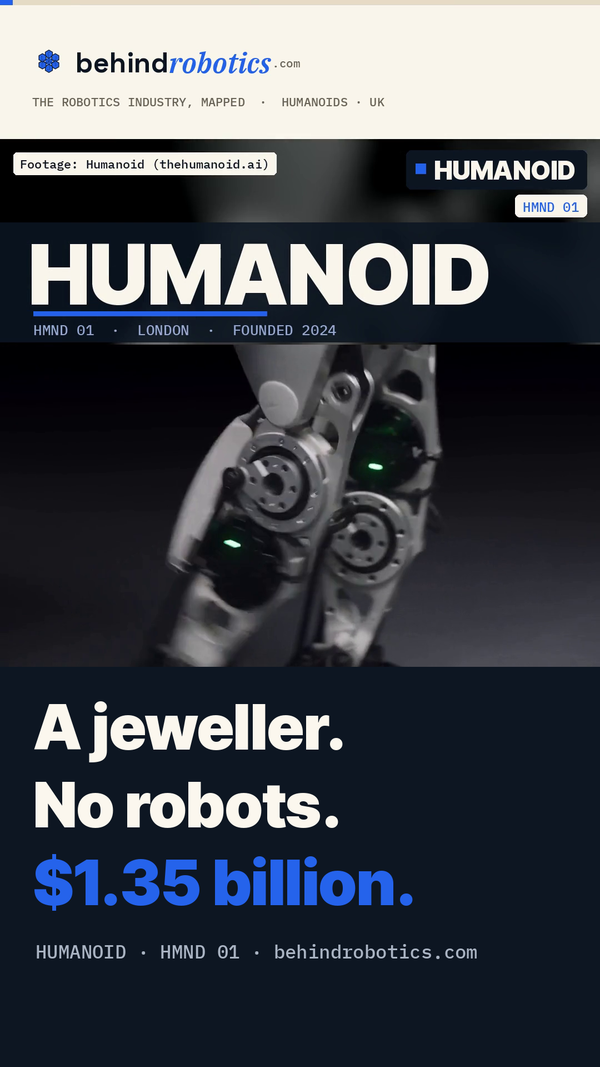
In under two years, a Russia-born jewellery magnate turned ~$30M of his own money into Europe's first pure-play humanoid unicorn — and put a wheeled robot on a live Siemens factory floor. Inside Humanoid, its HMND 01, and the fortune that funded it.
Most humanoid-robot origin stories start in a university lab. Humanoid's starts in a jewellery workshop in a Russian village that has made jewellery since the 16th century. Founder Artem Sokolov — a third-generation jeweller — took over his family's business at 21, scaled it roughly tenfold to around $1 billion in annual revenue, sold it in 2025, and poured the proceeds into a London robotics company now valued at $1.35 billion. The twist that makes it a proper investigation: he'd never built a robot before.
01The founder
Artem Sokolov — third-generation jeweller, investor, rally driver, now robot-builder
Artem Sokolov
Russia-born entrepreneur, born into a jewellery family from Krasnoye-na-Volge, Kostroma. Took over the family business in 2014 at 21 and grew it ~10× before selling it in 2025. EY Entrepreneur of the Year 2021. Founder of venture builder SKL.vc (40+ investments) and Golden Falcon Capital. Seeded Humanoid with ~$30M (later told Reuters ~$100M total). Based in London; IMD-educated.
The part worth pausing on: Sokolov is not originally British. He's a Russian émigré entrepreneur whose fortune came from SOKOLOV, one of Russia's largest jewellery makers. The company he now runs is emphatically a UK story — headquartered in London, incorporated in 2024 as SKL Robotics Ltd, and pitched as proof that Britain can lead a hard-tech frontier. That tension — foreign founder, national-champion framing — runs through everything Humanoid says about itself.
How he made Sokolov Jewelry big at just 21
Russia's No.1 jewellery manufacturer since 2011 (per the Assay Chamber) — a vertically integrated maker + omnichannel retailer of gold (585) and silver (925) rings, earrings, bracelets, pendants and watches. Over 30,000 models, and more than 30 million items a year (50+ tonnes of precious metal). Its main complex is billed as Europe's largest in-house jewellery production facility.
Emphasis on domestic Russian metal, refined through its own subsidiary (Kvart). Diamonds historically via a De Beers site-holder; claims Responsible Jewellery Council alignment and growing use of recycled metal and lab-grown stones. Positioned as mass-market "affordable luxury" for Russian consumers (96% brand awareness among women 18–54), with multi-brand distribution in ~12 countries and its own boutiques in Switzerland.
He didn't found it — his parents did. Artem joined at 18 (2011) as the first marketing hire, took over in 2014 at 21, and scaled it ~10×. On 14 Aug 2025 he sold 100% to investor Anton Pak (advised by Aspring Capital); price undisclosed, estimated ₽30–65B. He said he'd focus on his own projects, venture investing and the family foundation — i.e. Humanoid.
Company briefing compiled from Wikipedia, Interfax, Brandmine, Tadviser & FAS filings [12][13][14]
His background matters because it explains the company's unusual DNA: operations-first, not lab-first. Sokolov came from running large-scale manufacturing, so instead of chasing the most impressive demo, Humanoid optimised for what factory owners actually buy — reliability, throughput, and a machine that can be certified and deployed this year.
02The robots
Two platforms, one brain — swipe each gallery
Humanoid builds the HMND 01 in two forms: a wheeled "Alpha" that's near-deployment, and a bipedal version for the longer game. Both run the same in-house AI. Photos are from Humanoid's own material.
03Why it can carry 15kg
The engineering behind the payload — and who supplies the parts
A 15kg bimanual payload sounds modest until you realise most humanoids strain well below that. Humanoid gets there through a mix of design choices and supplier-grade components — and unusually, they've told us a fair amount about how.
How the payload is won
Simulation-first actuator selection. Using NVIDIA Isaac Sim, the team optimised actuator choice, joint strength and mass distribution virtually before cutting metal — matching motor torque to each joint's real load. This also compressed prototype time from a typical 18–24 months to ~7 (company-stated). [1][2]
Keep the load close to the body. Humanoid states 15kg — or more if payloads are kept close to its body, cutting the torque demand on shoulder and elbow joints. Lever-arm physics, engineered around. [7]
Supplier-grade drivetrain. Its Schaeffler deal makes Schaeffler the preferred actuator supplier (covering >50% of demand through 2031 — a seven-digit number of actuators); Bosch will integrate actuators, drives and sensors into future versions. Automotive-tier motion, not hobby parts. [6][8]
Wheeled base = more mass budget. The 300kg wheeled Alpha doesn't spend its power budget balancing a bipedal gait, so more torque and structure go toward lifting and reach (floor to 2m, shelves 60cm deep). [3]
The honest caveat: Humanoid has not published a full bill of materials, so exact reducer or motor part numbers aren't public. What's confirmed is the Schaeffler actuator partnership, the Bosch component-and-manufacturing tie-up, and NVIDIA silicon for compute. For a company this young, that supplier roster is itself the story: it's borrowing the automotive supply chain rather than inventing one.
04The tech stack & the brain
KinetIQ, and a simulation-heavy path to real-world autonomy
The software layer is KinetIQ — a proprietary four-layer framework built on vision-language (VLM) and vision-language-action (VLA) models for end-to-end orchestration of humanoid fleets. KinetIQ Ascend adds trial-and-error learning. It runs on NVIDIA's physical-AI stack: Jetson Thor on-robot, Isaac Sim for simulation, Isaac Lab for RL.
05Proof of concept: on the factory floor
Not a lab demo — a live shift at a Siemens plant
06The core team
~250 people from Big Tech — and, notably, the jewellery business
Humanoid is a bet that the winning humanoid company won't be the one with the flashiest bipedal demo, but the one that ships a certifiable, deployable machine first. By starting wheeled, borrowing the automotive supply chain, and leaning on simulation, a jeweller with no robotics background built a unicorn in 24 months. The open questions: can the bipedal version — and real revenue — arrive before the runway and the hype cycle run out, and do the company's ~34,000 claimed pre-orders convert?
Sources & further reading
Figures from public sources on the dates shown; several traction numbers (pre-orders, $2.4B ARR, build timelines) are company-stated and unverified. Humanoid has not published a full bill of materials. Photos are from Humanoid's own materials, used editorially. Analysis, not investment advice.